


Are We Really Free?
Freedom is often imagined as independence. The idea appears everywhere: if there were fewer rules, fewer structures, fewer authorities, then freedom would finally begin. This way of thinking shows up most clearly in how people talk about work, systems, and institutions. The assumption is simple: structure restricts, and removing structure liberates.
But when this idea is followed through carefully, it starts to unravel.
Leaving one structure rarely means entering a space without limits. It usually means entering a different one. Employment has contracts and hierarchies; self-employment has clients, markets, and financial pressure. Digital platforms promise open expression, yet operate within guidelines, moderation, and technical constraints. Even personal websites, often seen as the ultimate form of autonomy, depend on providers, infrastructure, software, internet and electricity that no single individual controls.
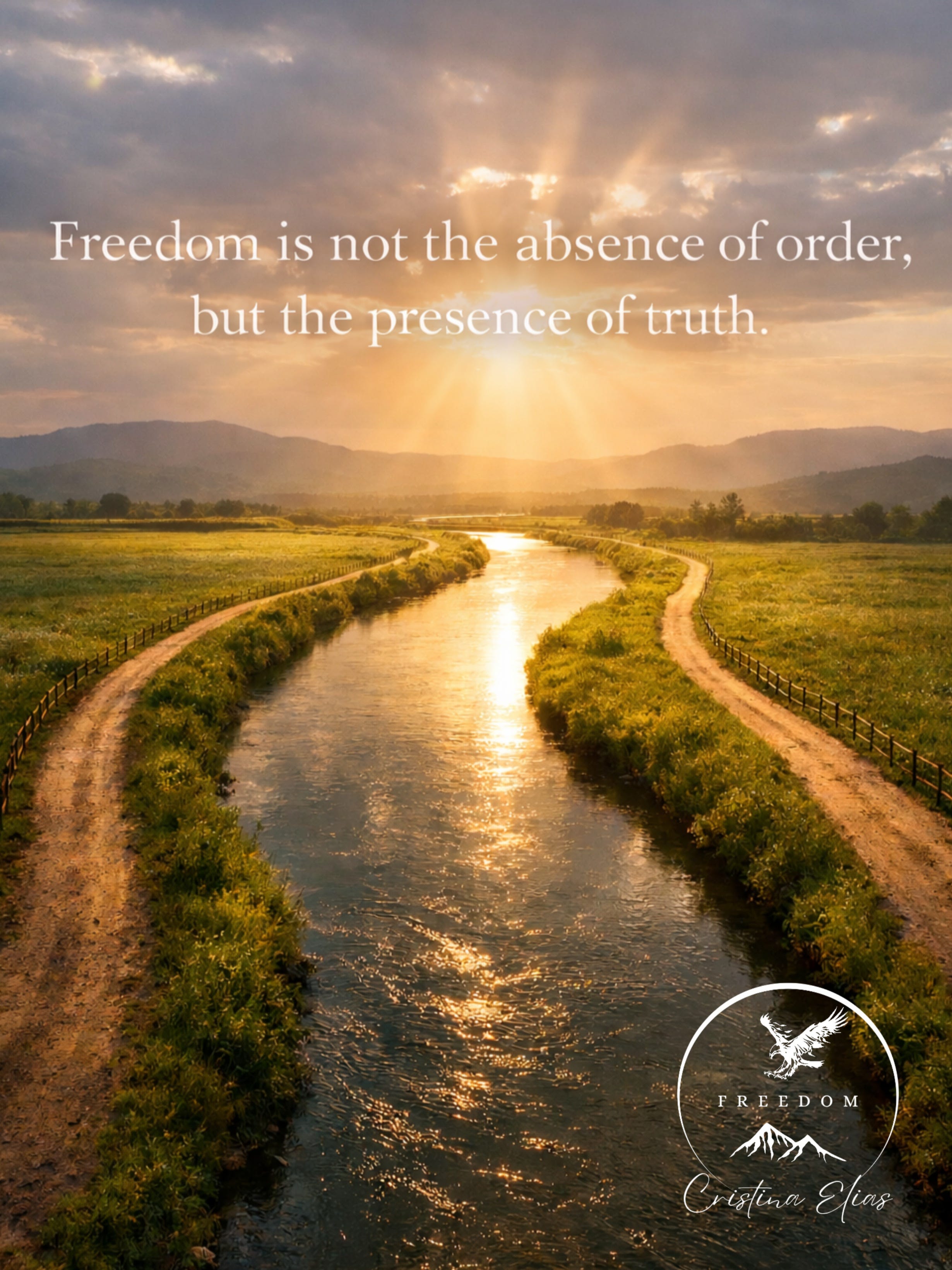
At every level, freedom does not appear as the absence of structure. It appears as movement within it.
This raises a deeper question: if human life is always embedded in systems, relationships, and shared realities, then what does freedom actually mean? If dependency is unavoidable, then freedom cannot simply be “doing whatever one wants.”
This is where the conversation shifts from social systems to something more fundamental.
Even in biblical thought, freedom is never described as disorder. The language used is not that of chaos, but of a kingdom — a reality shaped by order, direction, and purpose. Boundaries are not presented as the opposite of freedom, but as the conditions under which life flourishes.
One well-known passage frames this tension clearly:
“You will know the truth, and the truth will set you free.” (John 8:32)
Freedom here is not linked to the removal of all limits, but to alignment with truth. In other words, freedom is not defined by unlimited choice, but by living in accordance with what is real and life-giving.
Another passage makes the distinction even sharper:
“It is for freedom that Christ has set us free. Stand firm, then, and do not let yourselves be burdened again by a yoke of slavery.” (Galatians 5:1)
This kind of freedom is not self-created. It is not constructed by escaping systems one after another. It is received and lived out through alignment — not with control, but with purpose.
This leads to an important clarification. There is a difference between suppression and order, though the two are often confused. Suppression flattens identity and restricts what a person is meant to become. Order, by contrast, gives form. It creates space for growth, direction, and coherence. A life without any boundaries does not become more expressive; it becomes fragmented.
So the real question is not whether standards exist. They always do. The question is where they come from and what they produce.
Standards rooted in fear and control limit life. Standards rooted in truth shape it. From a biblical perspective, freedom is not the ability to redefine reality independently, but the capacity to live fully within the reality one was created for.
Seen this way, freedom is not the opposite of structure. It is the opposite of distortion.
It is not found by endlessly escaping systems, but by living in right relationship — with truth, with purpose, and with the One who defines both. And perhaps that is why freedom, as described in Scripture, is not something to be seized, but something to be entered.
To add on, seeking freedom is an invitation to serve oneself. With that, you can never even be happy. Speaking from experience. This was a great read, Amen!